

Published July 22, 2025
The Rich History of St. Augustine: America's Oldest City

The Rich History of St. Augustine: America's Oldest City
St. Augustine, Florida, stands as a living testament to the enduring spirit of exploration, conflict, and cultural fusion that shaped early America. Founded in 1565, it is the oldest continuously occupied European-established settlement in the continental United States. As a real estate destination, the city's historical allure adds immense value—charming colonial architecture, preserved landmarks, and a vibrant heritage draw buyers seeking properties that blend timeless elegance with modern living. Whether you're eyeing a historic home in the Old City or a contemporary residence near ancient sites, understanding St. Augustine's past reveals why it's not just a place to live, but a piece of history to own. In this blog post, we'll dive deep into its storied timeline, key events, influential figures, and how this legacy influences today's real estate market.
Early Exploration and Founding (1513–1565)
The story of St. Augustine begins long before its official founding, rooted in the Age of Exploration. In 1513, Spanish explorer Juan Ponce de León, then governor of Puerto Rico, sighted Florida's eastern coast on Easter Sunday, naming it "La Florida" and claiming it for Spain. He may have explored as far north as the future site of St. Augustine, searching for the mythical Fountain of Youth—a legend that persists today at the Fountain of Youth Archaeological Park.
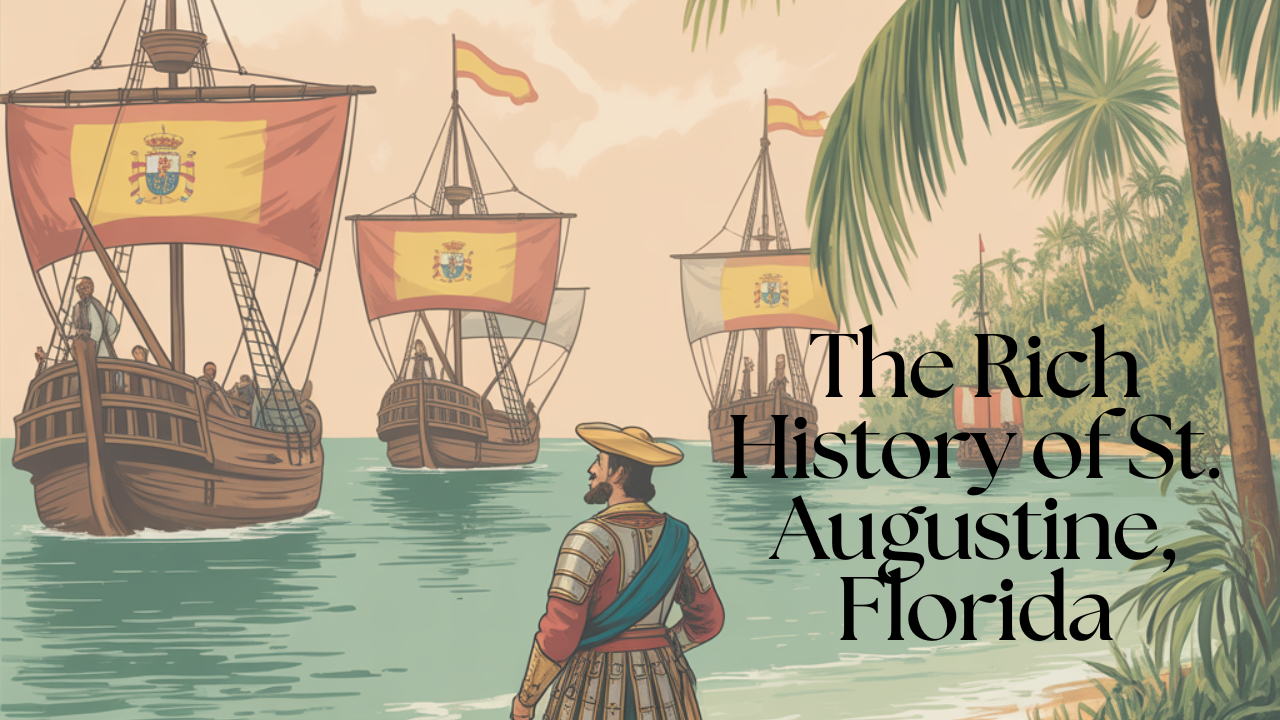
European interest intensified in the 1560s amid rivalry between Spain and France. In 1562, French Huguenot Jean Ribault explored the St. Johns River, founding Charlesfort on Parris Island. By 1564, René Goulaine de Laudonnière established Fort Caroline nearby, allying with the Timucua chief Seloy. The Spanish, viewing this as a threat to their treasure fleets, dispatched Pedro Menéndez de Avilés under King Philip II's orders. On August 28, 1565—the feast day of St. Augustine of Hippo—Menéndez sighted land and named the settlement San Agustín. He landed on September 8, 1565, with settlers, troops, and supplies, establishing fortifications in the Timucua village of Seloy for its strategic harbor.
Menéndez swiftly attacked Fort Caroline, executing most French survivors at Matanzas Inlet (meaning "slaughters"). This marked the birth of St. Augustine as a military outpost, missionary base, and defensive stronghold. Notably, in 1566, Martín de Argüelles became the first recorded child of European ancestry born in the continental U.S., and by 1606, the first recorded birth of a Black child was noted in cathedral archives—preceding Jamestown's enslaved arrivals by over a decade.
The First Spanish Period (1565–1763)
For nearly two centuries, St. Augustine served as the capital of Spanish Florida, facing raids, Native American resistance, and environmental challenges. The Saturiwa Timucua burned the settlement in 1566, prompting relocations, possibly to Anastasia Island. In 1568, French forces under Dominique de Gourgue attacked nearby Fort San Mateo in revenge but spared St. Augustine.
Pirate attacks escalated: In 1586, English privateer Sir Francis Drake raided and burned the city. In 1668, British buccaneer Robert Searle plundered it, leading Spain to construct the Castillo de San Marcos in 1672—a coquina stone fortress completed over 25 years, now the oldest masonry fort in the U.S..
Spain encouraged escaped British slaves to seek refuge, offering freedom upon conversion to Catholicism and allegiance to the king. This policy formed a free Black militia in 1683 and established Gracia Real de Santa Teresa de Mose (Fort Mose) in 1738—the first legally sanctioned free Black community in the U.S. In 1740, during the War of Jenkins' Ear, British Governor James Oglethorpe besieged St. Augustine but was repelled, with Fort Mose's defenders, led by Capt. Francisco Menendez, playing a key role.
Franciscan missions spread Catholicism, extending to Pensacola and the Carolinas, blending Spanish and indigenous cultures. Diseases and conflicts decimated the Timucua by the early 18th century.
British Rule (1763–1783)
The 1763 Treaty of Paris ceded Florida to Britain after the Seven Years' War, in exchange for Havana. Most Spanish residents evacuated to Cuba, and St. Augustine became a Loyalist haven during the American Revolutionary War. Governors James Grant (1764–1771) and Patrick Tonyn oversaw land grants and defenses, renaming Castillo de San Marcos as Fort St. Mark and using it as a prisoner-of-war camp for figures like Christopher Gadsden. East Florida Rangers were formed for protection.
Second Spanish Period and American Transition (1783–1845)
The 1783 Treaty of Paris returned Florida to Spain. Minorcan settlers from New Smyrna arrived in 1777, diversifying the population with Italian, Corsican, and Greek influences. Spain struggled amid European wars, and the 1819 Adams–Onís Treaty ceded Florida to the U.S. in 1821.
As a U.S. territory, Andrew Jackson established government, with St. Augustine alternating as capital with Pensacola until Tallahassee's selection in 1824. The Second Seminole War (1835–1842) saw conflicts with indigenous groups; Seminole leader Osceola was imprisoned at Fort Marion (renamed Castillo). Florida achieved statehood in 1845.
Civil War, Reconstruction, and Civil Rights (1861–1960s)
During the Civil War, Florida militia seized Fort Marion in 1861, but Union forces occupied St. Augustine in 1862, causing economic hardship. Lincoln's Emancipation Proclamation freed slaves, leading to the establishment of Lincolnville for freed people post-war—a district now on the National Register of Historic Places.
In the 1960s, St. Augustine was pivotal in the Civil Rights Movement. Dr. Robert Hayling and Martin Luther King Jr. organized protests against segregation, including sit-ins and marches. King was arrested on June 11, 1964, at the Monson Motor Lodge, where a famous acid-in-pool incident occurred. These events helped pass the Civil Rights Act of 1964 and Voting Rights Act of 1965.
The Flagler Era and Modern Development (1880s–Present)
Henry Flagler, Standard Oil co-founder, visited in 1883 and transformed St. Augustine into a winter resort for the wealthy. He built the Ponce de Leon Hotel (1887, now Flagler College), Hotel Alcazar (now Lightner Museum), and purchased the Casa Monica (restored in 1999 as a hotel). His Florida East Coast Railway (1885) connected St. Augustine to Jacksonville and beyond, boosting tourism.
World Wars impacted growth, but post-WWII recovery included museums and sightseeing tours. In 2015, the city celebrated its 450th anniversary with Spanish royals. Today, with about 2 million annual visitors, St. Augustine thrives on its history, arts, and outdoor activities.
Historical Sites and Attractions
Key landmarks include:
- Castillo de San Marcos: A 17th-century fort offering tours and reenactments.
- Fountain of Youth Archaeological Park: Explores Timucua and early Spanish life.
- Lightner Museum: Housed in the former Hotel Alcazar, showcasing Gilded Age artifacts.
- Gonzalez-Alvarez House (Oldest House): Dating to the 1700s, on the National Register.
- Fort Mose Historic State Park: Site of the first free Black settlement.
Explore via Old Town Trolley Tours for narrated insights.
Historical Homes and Real Estate Today
St. Augustine's history directly enhances its real estate appeal, with districts like the Historic District, Lincolnville, and Old City boasting preserved colonial and Gilded Age homes. The Gonzalez-Alvarez House (14 St. Francis St.) exemplifies early architecture, while Flagler's hotels now serve educational and cultural purposes. Currently, over 97 homes are for sale in the Historic District, with median prices around $987,250 in the Old City. Vintage estates abound, offering buyers a chance to own pieces of history. Neighborhoods like Lincolnville and Uptown feature restored properties, blending heritage with modern amenities. Strict architectural controls preserve the city's charm, making it ideal for investors and residents alike. For listings, check Zillow or Realtor.com.
Why St. Augustine's History Makes It a Premier Real Estate Choice
From its Spanish roots to its role in civil rights, St. Augustine's 460-year legacy creates a unique sense of place. Properties here aren't just homes—they're gateways to America's origins, attracting retirees, families, and history enthusiasts. With ongoing preservation by organizations like the St. Augustine Historical Society, the city's past ensures a bright future. If you're considering real estate in this enchanting city, contact us to explore options that connect you to centuries of stories.
For more on St. Augustine's history, visit the official city site or Wikipedia.


